 ENG
 JPN
 KOR








Product Introduction
Product Introduction Molecular Sieve
Activated Alumina
Alumina Silica
Home > Product Introduction > Molecular Sieve
Activated Alumina
Alumina Silica
Air Dryer Adsorbents (Desiccants) Molecular Sieve / Activated Alumina / Alumina Silica
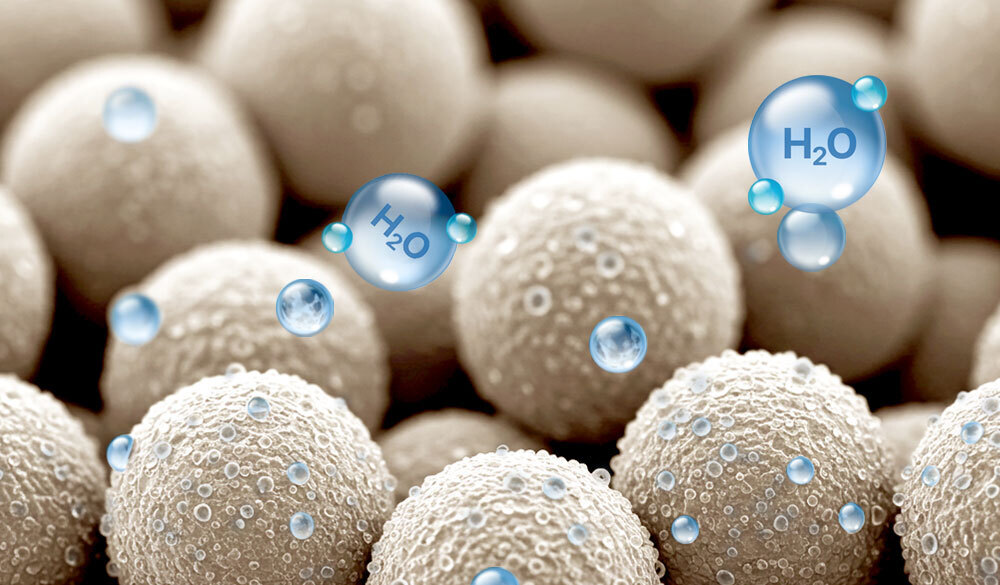
Typical adsorbents used in air dryers include Activated Alumina, Molecular Sieve, and Alumina Silica. These materials are widely used as adsorbents and desiccants in dehumidification systems to effectively remove large amounts of moisture from compressed air.
Air DryerAdsorbents
Molecular Sieve / Activated Alumina / Alumina Silica A desiccant commonly used in adsorption-type air dryers to effectively remove large amounts of moisture from compressed air.
Activated Alumina
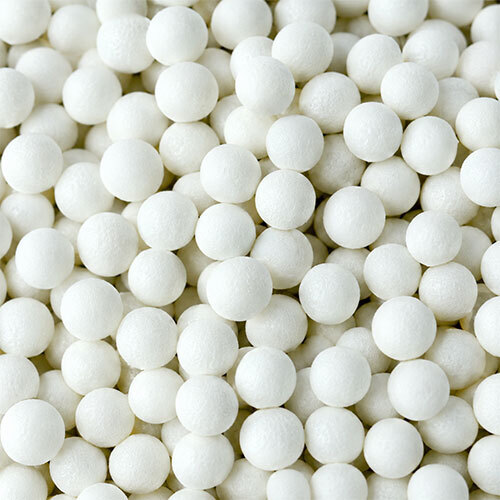
Mainly composed of Al₂O₃, Activated Alumina is one of the most widely used adsorbents in adsorption-type air dryers.
- High adsorption capacity for effective moisture removal
- High mechanical strength and excellent resistance to impact and abrasion, minimizing dust generation and air dryer contamination
- Uniform particle size
- Suitable for low-temperature regeneration and ideal for heatless air dryers (Regeneration Temperature: 180–200°C)
Molecular Sieve
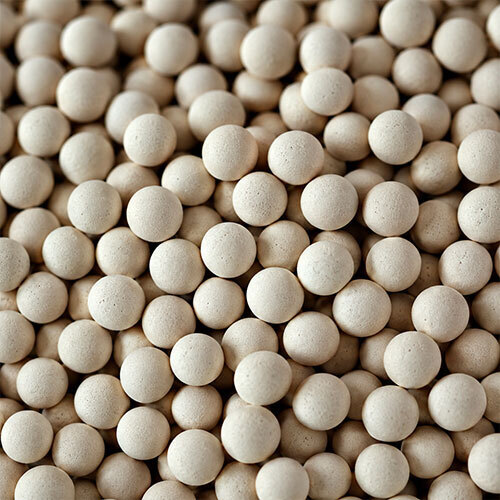
Mainly composed of Zeolite, Molecular Sieve is widely used not only for compressed air drying but also for moisture removal from gases.
- Adsorption capacity may decrease somewhat at high relative humidity, but at low relative humidity it provides higher moisture adsorption than Activated Alumina
- Requires a higher regeneration temperature than alumina-based adsorbents (Regeneration Temperature: 200–220°C)
- Excellent for removing trace amounts of moisture
Alumina Silica
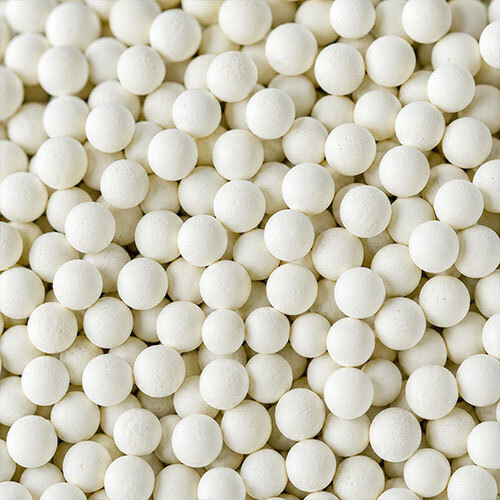
Mainly composed of SiO₂, Alumina Silica generates less dust and provides high adsorption performance due to its nearly twice-larger specific surface area.
- Adsorption performance may deteriorate when heated above 250°C (Minimum Equilibrium Pressure Dew Point: -70°C)
- Slightly more expensive than Activated Alumina, but offers significantly higher dehumidification performance and excellent cost-effectiveness
- Can be regenerated at lower temperatures while providing performance comparable to Activated Alumina during heated regeneration (Regeneration Temperature: 140–150°C)
Air Dryer Adsorbent Performance Comparison
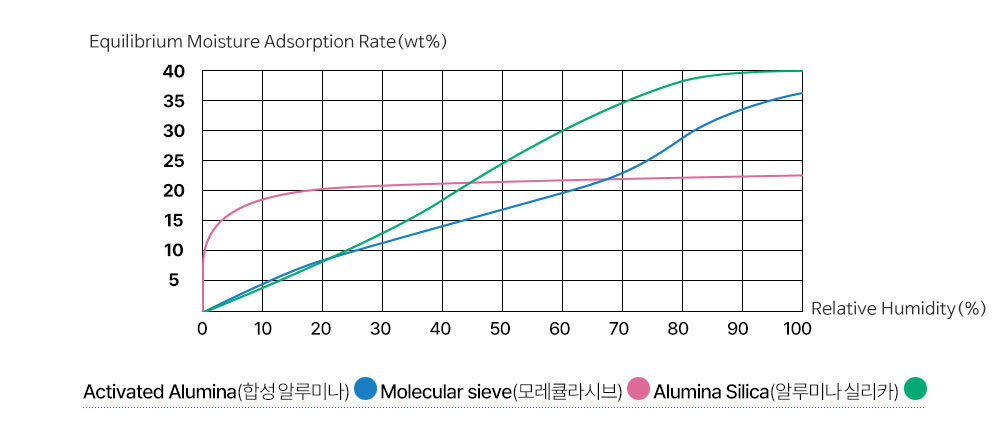
Propertiesand Conditions of Adsorbents
| Comparison Item | Activated Alumina | Molecular Sieve | Alumina Silica |
|---|---|---|---|
| Size(mm) | 2 ~ 6.4 | 1.5 ~ 5 | 204 ~ 4.75 |
| Al₂O₃ | 93% | - | 15% |
| SiO₂ | 0.02% | - | 85% |
| Surface Area | 360m²/g | - | 600m²/g |
| RH Adsorption Rate(50%) | 18wt% | 20wt% | 23wt% |
| RH Adsorption Rate(90%) | 40wt% | 21wt% | 38wt% |
| Total Pore Area | 0.5cc/g | 0.4cc/g | 0.45cc/g |
| Density | 769g/l | 700g/l | 760g/l |
| Crushing Strength | 25 ~ 32kg | 20kg | 15 ~ 20kg |
| Regeneration Temperature | 175 ~ 250°C | 200 ~ 300°C | 120 ~ 140°C |
| Dust Generation | Residue | Residue | Good |
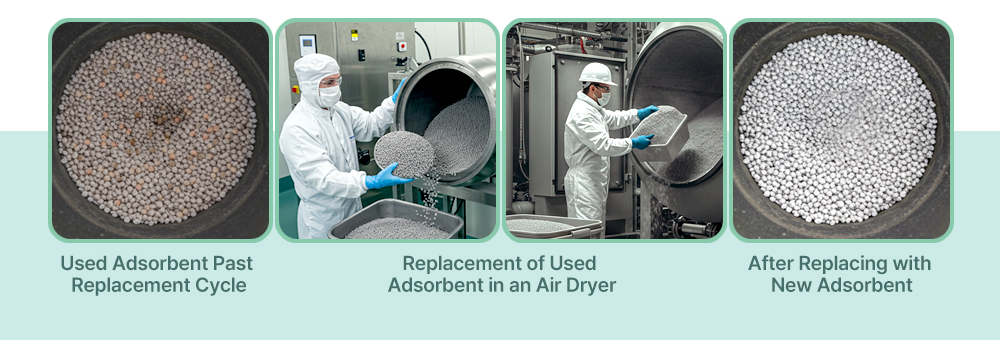
Adsorbent Replacement Cycle
Oil free 3~5year / Oil injection 1~2year
The replacement cycle of air dryer adsorbents varies depending on the type of air compressor used. When an oil-free air compressor is used, the adsorbent typically lasts 3~5 years or longer. With an oil-lubricated air compressor, replacement is generally recommended every 1~2 years.
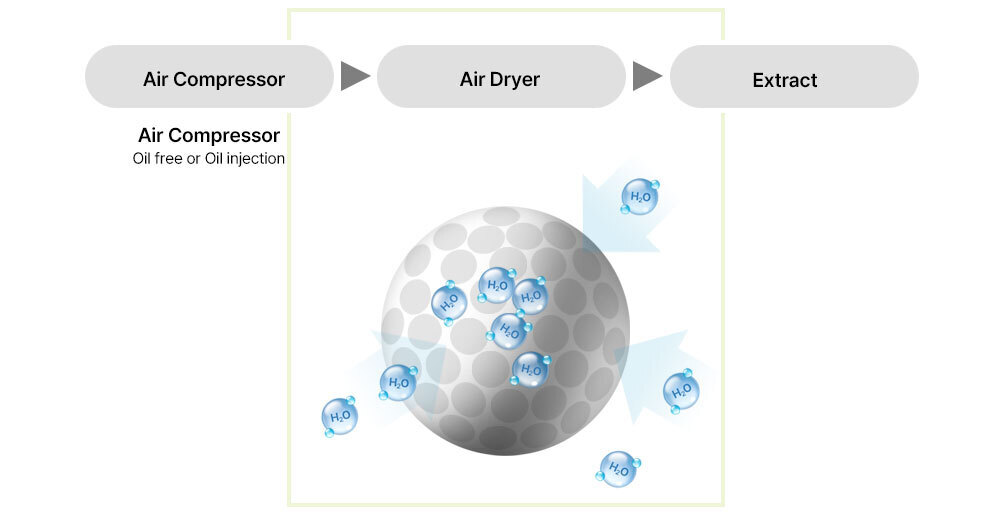
The dehumidification performance of an adsorbent can be measured by analyzing a sample however, this process requires considerable time and cost. The maximum replacement cycles listed above are based on normal compressed-air operating conditions. If the compressed air contains high levels of oil or moisture, the adsorbent should be replaced earlier than the stated maximum replacement interval.
#Adsorbent #Desiccant #ActivatedAlumina #MolecularSieve #AluminaSilica #AirDryer #CompressedAirDrying #CompressedAirDesiccant